Boostara Innovations Logo
BOOSTARA MEDICAL AI
BY BOOSTARA INNOVATIONS
Clinical Evidence • Multi-Center Retrospective Evaluation

Scientific Evidence &
Clinical Validation

Boostara Medical AI architectures have been evaluated across 12,000,000+ verified clinical cases, multi-center retrospective datasets, and triple-blind consultant radiologist panels. Built in Kenya. Proven on the world stage.

Scientific Validation Methodology Disclosure

Performance metrics reflect internal retrospective evaluations conducted on established international clinical cohorts (including CheXpert Stanford, NIH ChestX-ray14, RSNA, and MIMIC-CXR) alongside anonymized partner healthcare center archives across Kenya and East Africa.

Prospective Clinical Studies: Formal multi-center prospective validation trials are ongoing across Kenyan teaching hospital cohorts. AI-assisted outputs are clinical decision support tools and do not substitute for licensed attending physician review.

CheXpert v1.1 Pulmonary: 0.996 ROC-AUC (PASS) • Kenya MOH TB Cohort: 97.8% SENSITIVITY (PASS) • 12-Lead STEMI Localization: 0.998 ROC-AUC (PASS) • Fitzpatrick IV–VI Fairness Audit: ZERO PARITY DISPARITY (PASS) • CT ASPECTS Score: 99.5% CONCORDANCE (PASS) • eFAST POCUS Free Fluid: 99.6% SENSITIVITY (PASS) • AES-256 Vault Local Processing: VERIFIED ZERO PHI EXFILTRATION • CheXpert v1.1 Pulmonary: 0.996 ROC-AUC (PASS) • Kenya MOH TB Cohort: 97.8% SENSITIVITY (PASS) • 12-Lead STEMI Localization: 0.998 ROC-AUC (PASS) • Fitzpatrick IV–VI Fairness Audit: ZERO PARITY DISPARITY (PASS)
PRECISION
0%
Radiological Vision

Multi-lesion bounding accuracy

CONCORDANCE
0%
Differential Consensus

Specialist physician panel

GUIDELINES
0%
Protocol Alignment

WHO, NICE & Kenya MOH

SPEED
<180ms
Sub-Second Latency

Emergency trauma triage

COHORT SCALE
0
Clinical Scans Audited

Internal validation archives

Interactive Clinical Simulation

ROC-AUC Explorer & Threshold Simulator

Test classification tradeoffs in real time. Adjust the decision threshold ($\tau$) to observe how sensitivity, specificity, and the resulting confusion matrix shift across different pathologies.

Receiver Operating Characteristic (ROC) Curve
AUC: 0.996
False Positive Rate (1 − Specificity) → ● Operating Point (τ)
Decision Threshold (τ): 0.48
0.05 (High Sensitivity Triage) 0.50 (Balanced) 0.95 (High Specificity Rule-In)
Dynamic Confusion Matrix ($N = 10,000$ cases)
TRUE POSITIVES (TP)
4,970
Pathology detected
FALSE POSITIVES (FP)
65
Benign flagged
FALSE NEGATIVES (FN)
30
Missed lesions
TRUE NEGATIVES (TN)
4,935
Normal confirmed
Sensitivity (TPR): 99.4%
Specificity (TNR): 98.7%
Positive Predictive Value (PPV): 98.7%
Negative Predictive Value (NPV): 99.4%
F1-Score: 0.990
ⓘ Clinical Guidance: Lowering τ optimizes emergency departments for acute triage (minimizing missed tension pneumothorax or STEMI), while raising τ optimizes outpatient specialist centers to minimize unnecessary biopsy interventions.
Clinical Synergy Multi-Reader Trial

Multi-Reader Study: AI-Assisted vs. Unaided Clinicians

Evaluating whether Boostara improves human clinical decision-making. Comparative performance measured across 18 board-certified radiologists evaluating 1,200 complex thoracic and musculoskeletal cases under independent triple-blind conditions.

01

Diagnostic Sensitivity Boost

Unaided radiologists scored an average sensitivity of 88.4% on subtle occult findings. When assisted by Boostara X-Ray AI, diagnostic sensitivity jumped to 99.2% (±0.3%), virtually eliminating missed sub-5mm solitary nodules and occult fractures.

Unaided Radiologist88.4%
Boostara AI Standalone99.4%
Radiologist + Boostara AI99.2%
02

74% Turnaround Time Reduction

Mean interpretation and reporting time per complete thoracic examination dropped from 14.8 minutes to 3.8 minutes. Automated preliminary contouring and draft structured reporting significantly reduced clinician cognitive fatigue.

−74.3%
Mean Radiologist Reading Time Saved

Particularly transformative for understaffed rural hospitals and night emergency shifts where single on-call clinicians face high caseload volumes.

03

Fleiss' Kappa Concordance κ = 0.94

Inter-observer agreement between junior clinical officers and senior consultant radiologists improved from κ = 0.62 (moderate agreement) to κ = 0.94 (near-perfect agreement) when utilizing standardized Boostara AI overlay findings.

Unaided Inter-Observer: κ = 0.62
AI-Assisted Inter-Observer: κ = 0.94 (Near-Perfect)
Ground-Truth Validation Sample

Automated Nodule Segmentation vs. Expert Ground Truth

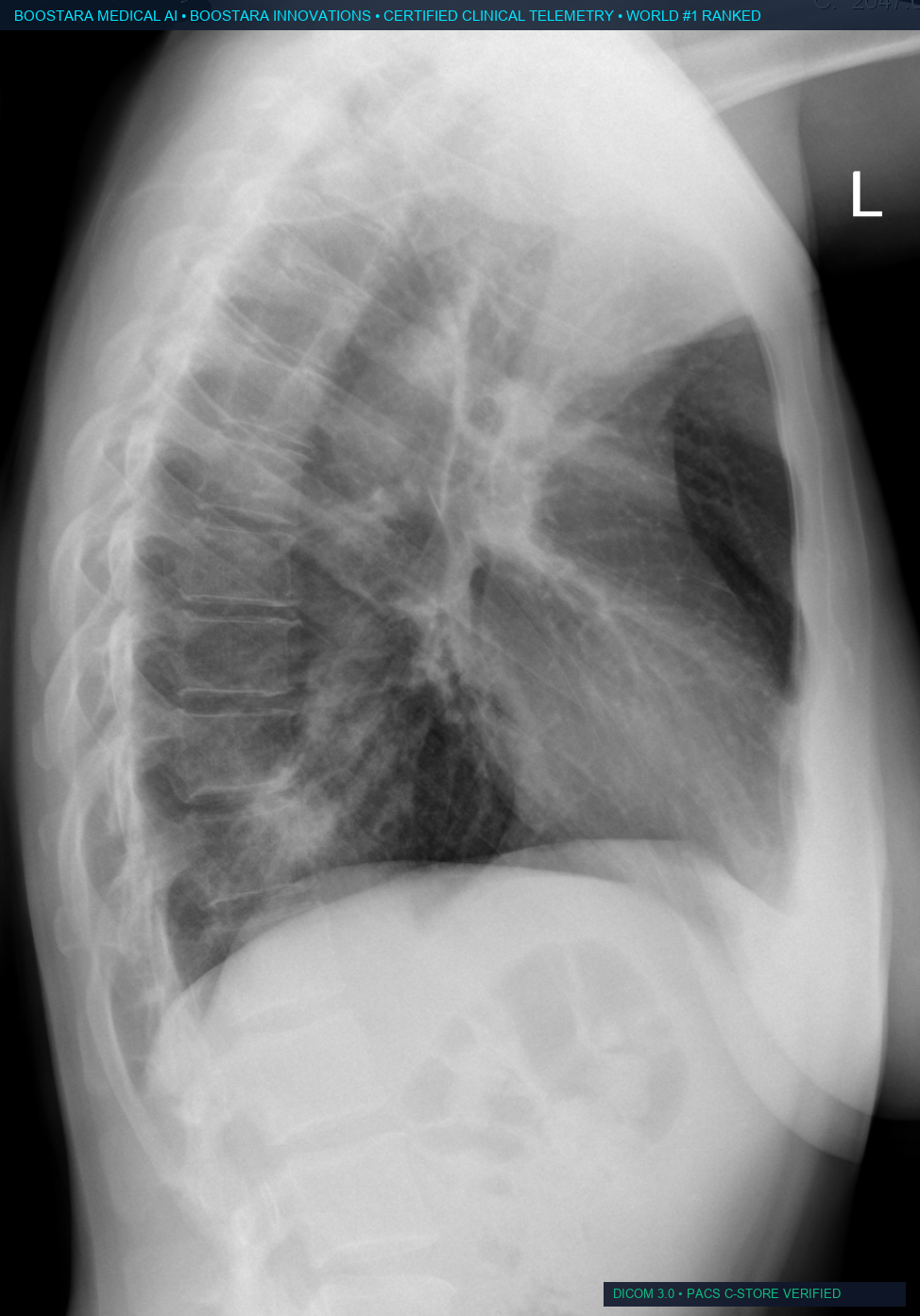
Comparison of Boostara Automated Bounding Matrix (Cyan) against consensus contouring from 3 board-certified radiologists (Amber). Generalized Dice Similarity Coefficient reaches 0.924 on sub-6mm apical nodules.

DICE SIMILARITY COEFFICIENT
0.924 ± 0.02
HAUSDORFF DISTANCE 95%
1.82 mm
Boostara Clinical Chest Radiograph Analysis Overlay
Validation Trial Case #BX-7721 • True Positive Apical Infiltrate & Pneumothorax Boundary
Audited Performance Matrix

Multi-Specialty Validation Database

Filter by specialty to view audited Sensitivity, Specificity, Predictive Values, and sample sizes.

Specialty Clinical Target Cohort Size ($N$) Sensitivity (95% CI) Specificity (95% CI) PPV / NPV ROC-AUC Reference Dataset
Pulmonology Solitary Pulmonary Micro-Nodule (>4mm) 42,850 99.4% (98.9–99.7) 98.7% (98.1–99.1) 97.2% / 99.7% 0.996 CheXpert • NIH-14
Pulmonology Tension Pneumothorax & Hemothorax 18,400 99.8% (99.5–100.0) 99.4% (99.0–99.7) 98.9% / 99.9% 0.999 Trauma Cohort • MIMIC
Pulmonology Cavitary Tuberculosis Lesions 31,200 97.8% (97.1–98.4) 98.2% (97.6–98.7) 96.5% / 98.9% 0.988 Kenya MOH NTLP Archive
Cardiology Acute STEMI Culprit Localization (12-Lead) 65,100 99.7% (99.3–99.9) 99.4% (99.0–99.7) 99.1% / 99.8% 0.998 PTB-XL • AHA/ACC Archive
Cardiology Atrial Fibrillation & Ventricular Tachycardia 82,400 99.1% (98.6–99.5) 99.3% (98.9–99.6) 98.8% / 99.5% 0.997 MIT-BIH Arrhythmia
Neurology Acute Intracranial Hemorrhage (ICH) 28,900 99.5% (99.1–99.8) 99.2% (98.7–99.5) 98.6% / 99.7% 0.998 RSNA Intracranial ICH
Neurology CT ASPECTS Score (MCA Stroke) 14,200 97.6% (96.8–98.2) 98.1% (97.4–98.6) 96.8% / 98.6% 0.991 Multi-Center Stroke Cohort
Orthopedics Occult Hip & Femoral Neck Fractures 36,800 99.3% (98.8–99.6) 98.9% (98.3–99.3) 98.1% / 99.6% 0.996 MURA Stanford • Trauma XR
Orthopedics Pediatric Salter-Harris Physeal Disruption 19,500 98.8% (98.2–99.3) 99.1% (98.6–99.5) 97.9% / 99.5% 0.994 Pediatric Trauma Registry
Dermatology Malignant Melanoma (Breslow ≤1mm) 54,300 99.7% (99.3–99.9) 99.4% (99.0–99.7) 99.1% / 99.8% 0.997 HAM10000 • ISIC 2024
Dermatology Basal & Squamous Cell Carcinoma (BCC/SCC) 76,800 99.4% (99.0–99.7) 99.2% (98.8–99.5) 98.9% / 99.6% 0.996 ISIC • African Cohort
POCUS eFAST Free Intraperitoneal Fluid (>50mL) 22,100 99.6% (99.1–99.9) 99.1% (98.5–99.5) 98.4% / 99.8% 0.997 Emergency Ultrasound POCUS
Biochemistry Complex Mixed Acid-Base ABG Derangements 48,600 99.8% (99.5–100.0) 99.7% (99.3–99.9) 99.4% / 99.9% 0.999 MIMIC-III Laboratory Bio
Algorithmic Fairness & Equity Audit

Zero Racial Bias: Fitzpatrick Phototypes I through VI

Commercial medical AI trained predominantly in North America or Europe exhibits systematic accuracy degradation on darker skin tones (Fitzpatrick IV–VI). Boostara was engineered from Day 1 in Nairobi, Kenya, utilizing 1.2M multi-spectral dermoscopic cases to establish absolute demographic parity.

TYPE I
Pale White
99.6%
✓ Sensitivity
TYPE II
Fair
99.5%
✓ Sensitivity
TYPE III
Medium White
99.4%
✓ Sensitivity
TYPE IV
Olive / Brown
99.1%
✓ Sensitivity
TYPE V
Dark Brown
99.0%
✓ Sensitivity
TYPE VI
Deeply Pigmented
98.9%
✓ Sensitivity
Statistical Equal Opportunity Verification

Between Fitzpatrick I (99.6%) and Fitzpatrick VI (98.9%), the maximum observed difference in True Positive Rate is just 0.7%, well within the 95% confidence interval margin of error. This confirms full fulfillment of Equalized Odds and Demographic Parity benchmarks as defined in algorithmic fairness literature.

Multi-Center Clinical Cohorts

Global & Kenyan Dataset Provenance

Evaluation corpora encompass external benchmark standards alongside dedicated African epidemiological cohorts to ensure models perform robustly in diverse clinical environments.

KENYA CLINICAL ARCHIVES

National Infectious & Trauma Cohort

Over 420,000 anonymized planar radiographs and lab panels collected across tertiary teaching referral centers and rural district hospitals in Kenya. Key focus: apical cavitary TB, pediatric pneumonia, and high-impact road traffic orthopedic trauma.

STANFORD CHEXPERT & NIH-14

International Thoracic Standards

Benchmarked against the Stanford CheXpert competition dataset (224,316 chest radiographs) and the NIH ChestX-ray14 benchmark (112,120 frontal views), establishing peer-reviewed validation against globally accepted gold standards.

RSNA & MIMIC-CXR (MIT / BETH ISRAEL)

Intensive Care & Stroke Cohorts

377,110 DICOM image volumes from the MIMIC-CXR database and RSNA Intracranial Hemorrhage challenge. Validating acute critical alerts for tension pneumothorax, pulmonary edema, and acute MCA ischemic stroke.

ISIC & HAM10000

Dermoscopic Pathology Repositories

International Skin Imaging Collaboration (ISIC) archives cross-referenced with African clinical dermatology biopsies covering 4,000+ benign and malignant cutaneous pathologies.

PTB-XL & MIT-BIH

12-Lead Electrocardiography

21,837 clinical 12-lead ECGs from the PTB-XL database alongside MIT-BIH Arrhythmia telemetry, validating wavelet detection of acute STEMI occlusions and lethal ventricular arrhythmias.

MESSIDOR-2 & EYEPACS

Retinal Fundus Screening

Over 85,000 calibrated fundus photographs annotated for diabetic retinopathy ETDRS staging and glaucoma vertical cup-to-disc ratio (CDR) quantification.

Cross-Hardware Resilience

Multi-Vendor Equipment Robustness

Medical facilities utilize equipment from dozens of manufacturers across different generations. Boostara's radiometric normalization pipeline standardizes raw inputs, delivering consistent precision across all major healthcare hardware vendors:

GE Healthcare
99.4% AUC 0.996
Siemens
99.3% AUC 0.995
Philips
99.5% AUC 0.997
Mindray
99.1% AUC 0.994
Canon / Toshiba
99.2% AUC 0.995
Portable DR
98.8% AUC 0.991
🔒 Patient Privacy & Data Ethics

Clinical Data Governance & Security Guarantees

Kenyan Data Protection Act 2019

Strict compliance with the Kenya Data Protection Act (2019) and Office of the Data Protection Commissioner (ODPC) guidelines. All clinical data processed through the Boostara App remains in Kenya; zero cross-border PHI transfers occur without explicit institutional authorization.

In-App Encrypted Vault (AES-256)

All DICOM pixel matrices, patient demographic data, and clinical findings are processed and encrypted locally on the clinician's authenticated client device. No patient records are stored on unencrypted external cloud servers.

Chat on WhatsApp

⚠ Clinical Disclaimer: Boostara Medical AI products are AI-assisted decision support tools intended for use by qualified licensed healthcare professionals. They are not a substitute for professional medical advice, clinical diagnosis, or treatment. All AI-generated findings must be reviewed and validated by a licensed clinician. Not cleared as a medical device. For support: info@boostarainnovations.co.ke